The headline numbers out of Ascension Parish look like a market running hot. Buyers closed on 160 homes in June 2026, up 15.1% year over year, sellers received 98.8% of asking, and the median crossed $334,939. If you have been searching from Dallas or New Orleans and pulling up Prairieville listings on your phone at night, that is the market you are picturing. Fast, priced up, competitive.
The market you will actually walk into is a different one. Days on market in Ascension climbed to 66 in June, and the May cut ran 69 days, a 19% jump year over year. The inventory that does exist keeps clearing, but the pipeline of move-in-ready new construction has quietly narrowed to a trickle. The gap between those two truths is the entire story, and it changes how you should be shopping.
"The newer the house looks, the more updated and move-in ready, those are moving a lot faster than some that may need updates," Jennifer Hebert of Pennant Real Estate, current GBRAR president, told the Baton Rouge Business Report in April. What she said next matters more for buyers: builders have stepped back from speculative construction, a shift she called a departure from pre-pandemic conditions when purchasers could buy homes at various stages of construction.
The mechanism buyers keep missing
Speculative building is when a builder pours the slab, frames, finishes, and lists — betting the home will sell after it is done. Pre-sold building is when the contract comes first and the slab comes second. Both produce new houses. Only one produces new houses you can tour on a Saturday and close on in 30 days.
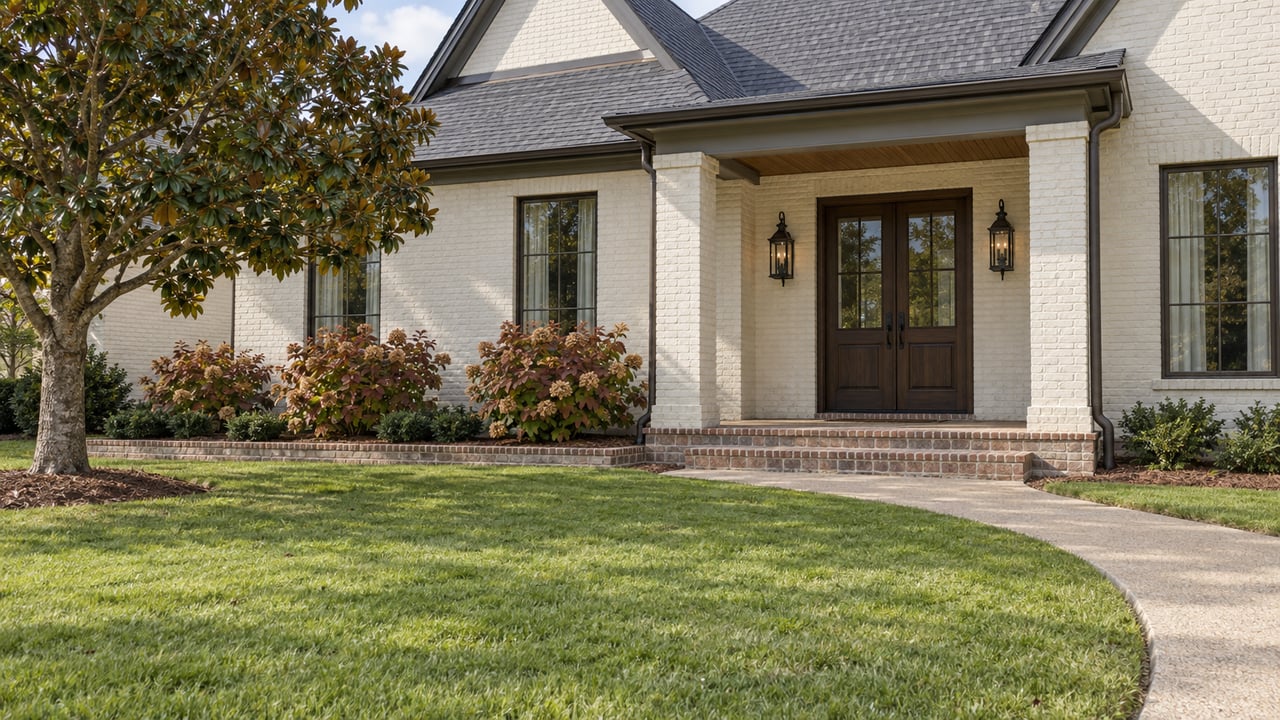
In Prairieville right now, the mix has tilted hard toward the second model. Level Homes, one of the more active builders in Ascension, acquired 15 lots in the Heritage Crossing development in late July through six separate transactions from VCD LLC and Jamie Marie LLC. Lots, not finished houses. That inventory will meet buyers as contracts and construction timelines, not as a listing photo.
The demand pushing behind that pipeline is not softening. Ascension Economic Development Corporation reported 22 active projects worth $16.5 billion in capital expenditure earlier this year, anchored by Hyundai Steel's $5.8 billion mill near Donaldsonville (1,470 jobs), CF Industries' $4 billion investment, Air Products' $4.5 billion project, and Linde's $422 million build. Momentum Commercial's Charlie Colvin told the Business Report that national retailers are still waiting for those industrial announcements to convert into permanent households before committing. Builders are doing the same math, and it is why they are not stockpiling spec homes.
What is actually in the ground
The activity is real, it just does not look like open-house Saturdays. Recent Ascension permits and lot moves that signal where inventory will emerge over the next 12 to 24 months include:
- Heritage Crossing — Level Homes' 15-lot acquisition, positioned for build-to-order product.
- The Meadows at Oak Grove — a $1.75 million Hood Dental Care office went vertical at Grand Meadow Drive and LA 42, a retail anchor pattern that typically follows rooftop growth.
- Jamestown Crossing — DSLD's community off Highway 930 near Highway 42, roughly 170 homes originally launched from the mid-$200s, still cycling resale and new inventory.
- Havenscourt — a 16-unit assisted living facility on Airline Highway, a demographic tell that the age-in-place buyer is being planned for.
None of that shows up on a Prairieville listings map today. All of it is scheduled inventory, and understanding the difference is the point.
The transaction frictions this creates
If you have moved before, your instinct is to line up a rate lock, an inspection window, and a closing date around a home you have actually stood inside. That sequence breaks in a pre-sold market.
Rate lock exposure runs longer. When you sign a pre-sold contract in Prairieville today, delivery may sit 90 to 180 days out. Standard 60-day locks will not carry you to closing, and extended locks cost real basis points. Some builders offer forward-commitment programs through preferred lenders that neutralize part of this, and asking which lender is offering what buydown or extended-lock structure is a materially different conversation than shopping the same 30-year fixed at three banks.
Earnest money sits at risk differently. A resale earnest deposit typically clears at closing after a defined inspection contingency. A builder contract may structure earnest as design-center deposits, non-refundable option upgrades, or milestone draws. The dollar amount looks similar. The path back if the deal falls apart does not.
Appraisal timing gets tricky. Ascension's May 2026 median dipped 2.9% year over year to $307,781 while inventory rose 6.2% and months' supply climbed to 4.1, then June bounced back to a $334,939 median. That kind of monthly swing at the parish level is normal, but it complicates a pre-sold appraisal that gets ordered five months after contract signing based on comps that may or may not exist yet inside the same subdivision. Buyers who understand this negotiate appraisal-gap language up front instead of scrambling for it during underwriting.
Change-order creep is the real budget item. Design-center meetings are where the sticker price and the closing statement drift apart. Nine out of ten times the delta lives in flooring, cabinet stain, and lighting, and none of those choices roll into the base loan amount without an appraisal update.
How to structure a Prairieville search that actually works
The buyers getting the best terms in this market are not chasing MLS notifications. They are building three parallel searches at once.
- A resale search filtered for updated or newer-build inventory. These are the homes moving fastest in the parish, per GBRAR data, and they compete directly with the pre-sold pipeline on presentation.
- A builder-relationship search. Get on the phase-release lists for the two or three subdivisions that fit your criteria. Phase releases in Ascension often move before they hit public marketing, and lot premiums vary by 10 to 15% inside the same community based on cul-de-sac position, pond frontage, or setback.
- A carry-cost search. Model the total cost of a 150-day pre-sold contract versus a 30-day resale close, including the additional interest, rent, or bridge exposure. In roughly a third of the deals I run this math on, the resale wins even when its list price is higher.
The interpretation that matters: Ascension is not slow, and it is not overheated. It is a market where new supply is arriving on the builder's clock rather than the buyer's, and the buyers who structure their search around that reality get the house they wanted at terms they can live with.
FAQ
Is it a bad time to buy new construction in Prairieville?
No. It is a different time. The homes are being built, and the parish's 743 closed sales through June, up 6.3% year to date, show buyers are still transacting. The change is in the sequencing. Expect to contract before you tour a finished product, and expect to negotiate around timeline as much as price.
Should I wait for prices to drop as more industrial workers arrive?
The demand-side signal from CF Industries, Hyundai Steel, Linde, and Air Products points the other way over the medium term. Charlie Colvin's read at Momentum Commercial is that retailers are underwriting permanent population growth, not a dip. Timing that curve precisely is speculation. Owning a home that fits your family is not.
What is a spec home worth relative to a pre-sold contract in the same subdivision?
In a builder's inventory that is deliberately thin, standing spec homes often carry a premium of a few percentage points over an equivalent pre-sold contract. What you pay for is certainty. Whether that premium is worth it depends on your rate lock, your carrying costs, and how much design-center flexibility you were going to use anyway.
If you are weighing Prairieville against Gonzales, Geismar, or a resale in Baton Rouge, the comparison worth running is not median-to-median. It is total-cost-to-total-cost across the timeline you can actually close on. That is the conversation I have with buyers every week, and it is where the parish's real numbers start to make sense. When you are ready to talk it through, Jodie B. Strain is here. Let's Connect.